

Field notes / Controls, decisions, and better rounds
From precise flicks to continuous movement
Pokemon Survivor offers a different test of control between Pen Fight sessions. Instead of lining up one release and watching its result, you steer continuously while an active move attacks for you. The useful connection is positioning: a strong action is only helpful if it leaves somewhere safe to go next. This page embeds the local solo edition of JPTER78's fan-made PokeSurvivor through Pokemon Survivor Wiki. It is not a multiplayer pen match, a traditional turn-based Pokemon battle, or an official Pokemon game. You choose a partner, gather experience, develop moves, and try to keep the arena manageable as pressure increases. Start with a practical training goal rather than a promised record. If you can explain why a route became unsafe, the next run already has something concrete to improve.
Warm up before chasing a long run
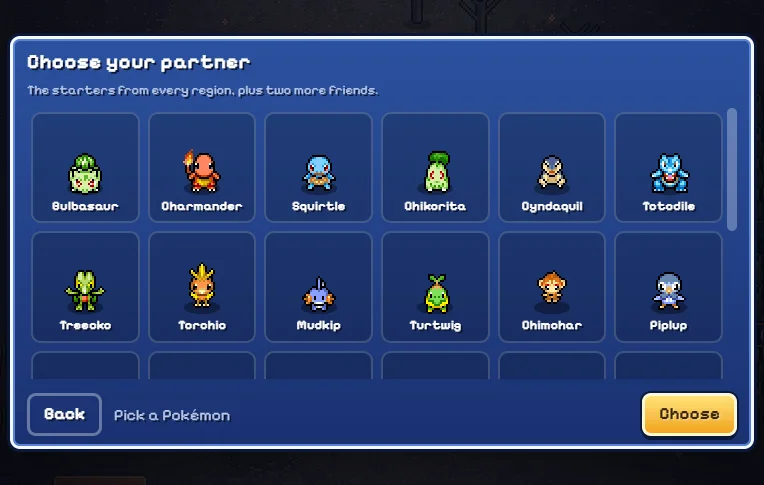
Press Play, wait for the frame to load, and give it focus with a click or tap. The first local session may begin with personality questions and partner selection. Choose a starting partner whose move you are willing to learn rather than assuming the portrait determines everything important. Partner types affect the available move pool, and the starting attack affects how the first minute feels. Use a short attempt to find the movement and pause controls before investing attention in collection systems. This hosted version does not require a microphone or an online lobby. It also does not share Pen Fight's account or multiplayer progress. Keep those experiences separate: opening another game in the same website is a navigation convenience, not a transfer of your statistics, saved matches, or account data.
Steer toward the next safe position
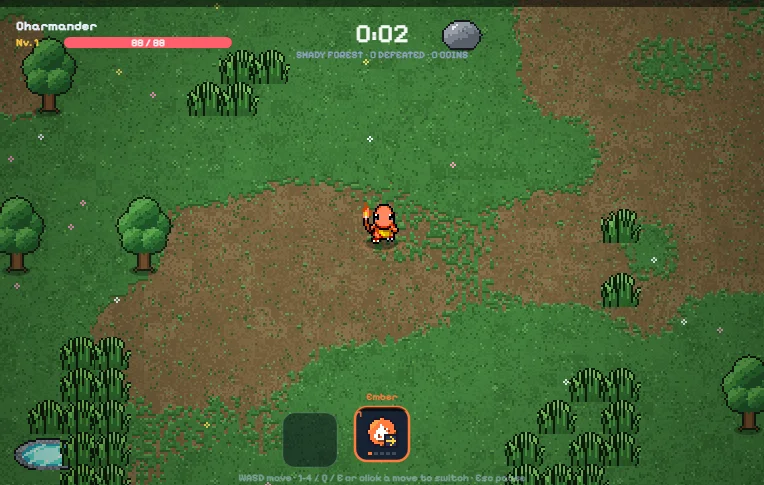
Use WASD or the arrow keys to move. Touch players drag to create the movement joystick. Unlike a pen release, the input does not end after one committed gesture, so you can revise your route continuously. Avoid letting that freedom turn into constant last-second reversals. Pick a nearby open area, travel toward it, then reassess. Watch terrain and the direction of approaching groups instead of staring only at the partner. A route is useful when it leaves an exit after arrival. If reaching a pickup would trap you against an obstacle, delay the collection and approach from elsewhere. Practising this judgement is more transferable than memorising one lucky opening. After a failure, describe where your options disappeared; that often reveals a movement problem before you need to replace the whole build.
Separate movement practice from switching practice
The active move fires automatically, but selecting it is your responsibility. Ordinary unbonded move slots are alternatives rather than simultaneous weapons. Press 1 through 4 to choose a slot, or Q and E to cycle. On mobile, tap the move icons. First practise movement with the starting attack, then add deliberate switching once you can keep space. Changing too many inputs at once makes it hard to understand what caused a mistake. When trying a new move, watch its range and the position from which it feels manageable. Do not assume that collecting four moves produces four attacks at every moment. Legendary bonds introduce another combination system later. Until then, the active indicator is the simplest explanation for why the attack you expected is not appearing.
Turn experience collection into a route
Experience pickups support your next level-up, but a direct line is not always the sensible path. Look for a route that collects useful items while keeping enough room to turn. Several modest pickups on open ground can be easier to handle than one tempting object behind a dense group. This is not a claim that you should always avoid risk. It is a way to make risk deliberate rather than letting every new object pull the partner in another direction. Try one run where you preserve an exit before collecting, then compare the moments that felt crowded. Keep other choices similar enough that the comparison means something. As in controlled Pen Fight practice, changing one habit gives clearer feedback than changing the direction, strength, and target of every attempt at the same time.
Use the card menu to solve a named problem
The level-up menu distinguishes new moves, move levels and run stat cards. Read the offer as a choice between different jobs. A new attack adds an option, while raising an existing move develops the option already in use. A stat card may improve a run attribute or complete an evolution requirement. Before selecting, ask what recently made movement difficult. Did you need another range, more development for the current move, or a specific card you had already planned around? This question does not produce a universal best answer, but it avoids choosing only by novelty. Legal moves come from the partner's types plus the Normal pool in this release. A move combination remembered from another Pokemon game is not automatically valid here. Use the game's actual offers and descriptions rather than importing a different game's rules.
Check evolution requirements in the right place
A move's evolution depends on its own level cap and the matching run card. Character level by itself does not finish that checklist. Nor does a permanent menu upgrade replace the card required during the attempt. The source documents Ember with Power and Bubble with Sprint as examples. Check other moves individually, because not every move has an evolution and buff moves do not evolve in this release. A matching card taken earlier in the same run counts; there is no need to select it at an invented exact moment. Eligibility also differs from receiving every evolution immediately. The level-up offer reserves a place for the first eligible option, so multiple qualifying moves may compete. Reading that offer carefully is more useful than repeatedly reloading, which interrupts the attempt instead of forcing a desirable result.
Choose when to accept a different challenge
Rifts lead to separate legendary arenas and are not the same event as ordinary bosses. Do not assume a boss timer is a portal schedule. Before entering, check health and the active attack, and make sure you can switch without looking away from the arena for too long. The encounter has a time limit, making clear inputs and preparation useful. Ground warnings need a response even when you are concentrating on damage. A victory can unlock a bond that changes move combinations within a slot; read the choice rather than treating it as a generic reward. This guide does not claim a benchmarked fastest partner or guaranteed winning build. Its advice is to reduce avoidable control confusion, then judge the actual encounter rather than expecting a portal to solve the run automatically.
Review results like a practice session
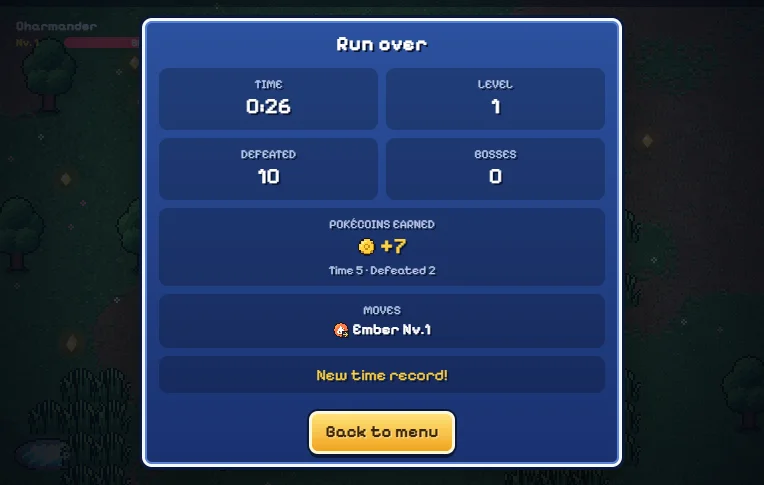
After an attempt, identify one moment that changed its direction. Perhaps you crossed a crowded line for experience, selected a move without adjusting distance, or mistook a permanent upgrade for a run requirement. That observation gives the next session a purpose. Inspect the result screen and the menu separately: some collection and progression can persist locally, while temporary move levels and cards belong to the run. An unfinished battle is not saved as a resumable state after refreshing. You can improve control without immediately improving every result, particularly while learning a new move. Avoid comparing your early local save directly with a video that begins with a developed collection. A useful comparison holds the partner and basic plan steady while testing a specific decision you can actually repeat.
Understand tickets before making collection plans
The local edition uses tickets earned in play for regional gacha banners, with no ticket purchase system. Each banner keeps its own pity counter. Pulls on different regions do not merge into a single guaranteed result. When a banner reaches the documented seventy-count condition, the guarantee is five-star rarity rather than a specific species; a five-star result resets that banner's counter. Ten-pull guarantees likewise concern rarity. Those rules are useful for reading the interface, but they should not become a reason to assume that a favourite must appear next. Work with the partners currently available and inspect their actual move pools. Pikachu and Eevee are collection unlocks in this edition, not evidence that your first partner screen is incomplete. A recording with more choices may simply show a different save or version.
Use references without interrupting the game
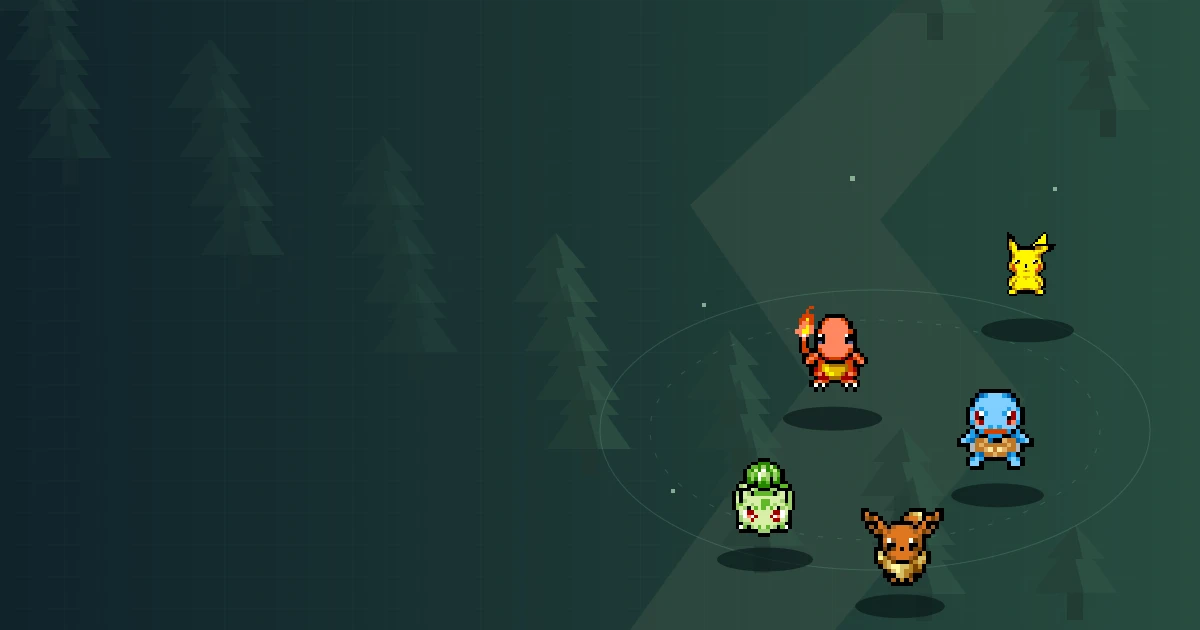
The guide images show real local interface states. The illustrated launch cover is different: it sets the theme but does not document an exact enemy formation or map. The two embedded videos can help you observe movement and slot changes, although their version and progression may differ from this host. Watch between attempts and pause when reading a menu. Trying to follow a recording while steering through a crowd creates a second attention task without guaranteeing a useful comparison. On a phone, test landscape layout, drag movement and slot taps before playing for longer. Fullscreen is a browser capability, not a promise of orientation lock or identical device performance. Esc or P pauses on keyboard; touch players can use the visible pause control. Learn how to stop deliberately before relying on tab switching as a break.
Keep saves separate from website navigation
The game is hosted on s.pokemonsurvivor.wiki, and its local data is not Pen Fight account data. Browsers may partition embedded storage by the surrounding website, so progress in this page can differ from opening the host directly or playing on another portal. Return through the same site and browser profile when continuing. Private sessions, storage restrictions and clearing site data can prevent or remove persistence. A wiki build export is not a backup of this game's collection or a live battle. If the frame fails to load, allow time for its resources and use the source link for help before clearing anything. Reloading can abandon the current run. These limits are worth understanding at the start, because a convenient embedded player does not turn browser storage into a cross-device cloud save.
Fan-made PokeSurvivor by JPTER78. Pokemon assets belong to their respective owners. Game and sprite credits.