

Choose a practice drill
This companion tool does not read or change your game save. Selections reset when this page reloads.
From a committed flick to continuous control
Aetheria Online gives Pen Fight players a different positioning problem. Instead of releasing a pen and watching its momentum, you keep adjusting a character while enemies move around you. The embedded game is Aetheria: Emberlight, an independent solo RPG. It is not a pen tournament, an online duel or the original MMORPG server.
The transferable habit is thinking about the next position. A powerful action is less useful when it leaves no room to respond. In Emberlight you can attack, move, dodge and recover, but combining these options takes attention. Begin with a simple drill that helps you understand one action before trying to optimise an entire build.
The practice selector on this page provides suggestions, not an automated coach. It does not observe the iframe, measure your reaction time or award a score. Choose a focus that matches what you want to learn, test it in the game and judge the result from the actual encounter rather than a fabricated website statistic.
Set up an input check
Click inside the game after it loads. Try moving a short distance with WASD or the arrow keys, then stop somewhere safe. Click-to-move is also available. If your browser scrolls instead of the character moving, keyboard focus may be outside the iframe. Correct that before treating an ability as unresponsive or changing settings unnecessarily.
Next, identify Space for a basic attack, Q for the class skill, Shift for dodge, E for interaction and R for a potion. M opens the map. Test one input at a time so you can recognise its result. Pressing every key together hides the difference between a cooldown, an out-of-range target and a focus problem.
On a phone, perform the equivalent short check with the game's touch controls. Do not judge gameplay compatibility solely from the surrounding page fitting the screen. Device performance and available space can affect comfort. Fullscreen or the direct game link may improve presentation, but neither should be advertised as a guaranteed fix for every device.
Choose the range you want to practise
Warden begins with high health and a short attack range, making proximity important. Ranger has a longer reach and faster movement, encouraging you to use open space. Star Mage also attacks from range but starts with less health and a stronger damage emphasis. Choose a class whose movement demands you want to understand.
A longer range does not mean you should stop watching nearby threats. Distance can disappear while you concentrate on one target. Likewise, more health does not turn every close encounter into a good trade. The class gives you a set of margins; positioning determines how much of those margins you actually preserve during a fight.
If a chosen style feels uncomfortable, try to identify why before restarting. Is it the distance, the speed or the number of simultaneous inputs? Export the current save before making another character. Class experimentation should not accidentally erase the progress that would help you compare what you learned on the next attempt.
Drill one: attack with an exit available
Pick a manageable encounter and notice an open area before attacking. Your goal is to understand where you could move afterward, not to finish the enemy in the fewest possible inputs. A visible exit gives you a plan when the situation changes. It is a practice constraint you choose, not a special challenge mode.
Use a basic attack when the target is within your class's effective range, then reassess the space around your character. If nothing happens, check distance and cooldown feedback rather than immediately pressing faster. A clean explanation of one unsuccessful attack can teach more than a messy victory where you cannot tell which action mattered.
Do not carry this drill into an unsafe situation just to prove consistency. If several threats arrive, change the plan and prioritise a manageable position. The purpose is to increase awareness, not to forbid healing or skills. Useful practice makes normal play more understandable instead of replacing the game's objectives with rigid self-imposed rules.
Drill two: spend a dodge deliberately
A dodge is most useful when it changes a situation you have already noticed. Identify where you intend to go before using Shift, then look at the position you reach. Did it create room for another action, or simply move you toward a different threat? That observation is more valuable than counting how often you dodged.
Avoid treating the movement as an emergency button that guarantees immunity from every bad decision. The game still has cooldowns and spatial constraints. If you repeatedly need another dodge immediately, the route leading into the encounter may be the real problem. Try approaching from a position with more room rather than blaming only the final input.
The selector's prompts are deliberately qualitative. This guide does not know the timing of your game, read enemy state or calculate a dodge success percentage. Use the actual screen to evaluate the attempt. When you need to review instructions, pause or reach a safe moment instead of splitting attention during active combat.

Drill three: make the skill purposeful
Q activates the class skill: Warden uses Whirlwind, Ranger uses Volley and Star Mage uses Starburst. Learn what your selected ability does in a controlled encounter. The useful question is why this moment is better than a moment earlier or later, not whether the button can be pressed as soon as it becomes available.
Watch the skill indicator and nearby enemies together. An ability can produce damage while leaving you poorly positioned for the next exchange. Try to combine its use with an understandable retreat or follow-up action. This does not require memorising a perfect rotation; it requires noticing what options remain after spending the ability.
If you are also learning basic movement, postpone complicated combinations. Practise the skill separately, then connect it to a movement habit you already understand. Adding complexity gradually makes failures easier to diagnose. Equipment upgrades may improve damage, but they cannot explain an action whose target, distance or timing you never observed.
Turn practice into chapter progress
The campaign provides practical objectives for using these habits. Tutoria Isle requires five ordinary defeats and three starleaves before the guardian stage. Redwater Forest increases those requirements to seven and four, and Glacial Plains uses eight and five. Check the journal to see what your character still needs in the current region.
Collection changes your route, so do not let an attractive pickup erase your awareness of nearby enemies. Deal with immediate pressure, approach deliberately and use E when close enough to interact. The objective is not merely to touch every point on a map; it is to complete the chapter while maintaining enough control to continue.
After defeating a guardian, follow the game's instruction to return to camp for onward travel. The next region is not selected through this website's navigation. Keep chapter actions inside the game, and use the guide only to clarify what they mean. An iframe and a webpage can share a screen without sharing progression state.
Use recovery to improve the attempt
R uses a potion when healing is available under the game's rules. Potions are limited consumables with a cooldown, so recovery is not an endless reset of a difficult encounter. Check supplies before a guardian attempt and pay attention to what caused the lost health rather than considering the health bar an unrelated resource.
Camp sells potions and equipment upgrades. Weapons improve damage and armor increases maximum health. If a fight repeatedly goes wrong because you get surrounded, equipment may provide more margin but will not remove the positioning issue. Spend with a specific purpose, then test whether that purchase actually changes the problem you identified.
A better attempt is not always a victory. It can be an attempt in which you recognise the unsafe turn earlier, avoid an unnecessary hit or remember to back up progress afterward. These are personal observations, not recorded achievements from this guide. Do not confuse an editorial practice suggestion with a feature implemented by the game.
Keep video and image evidence in its lane
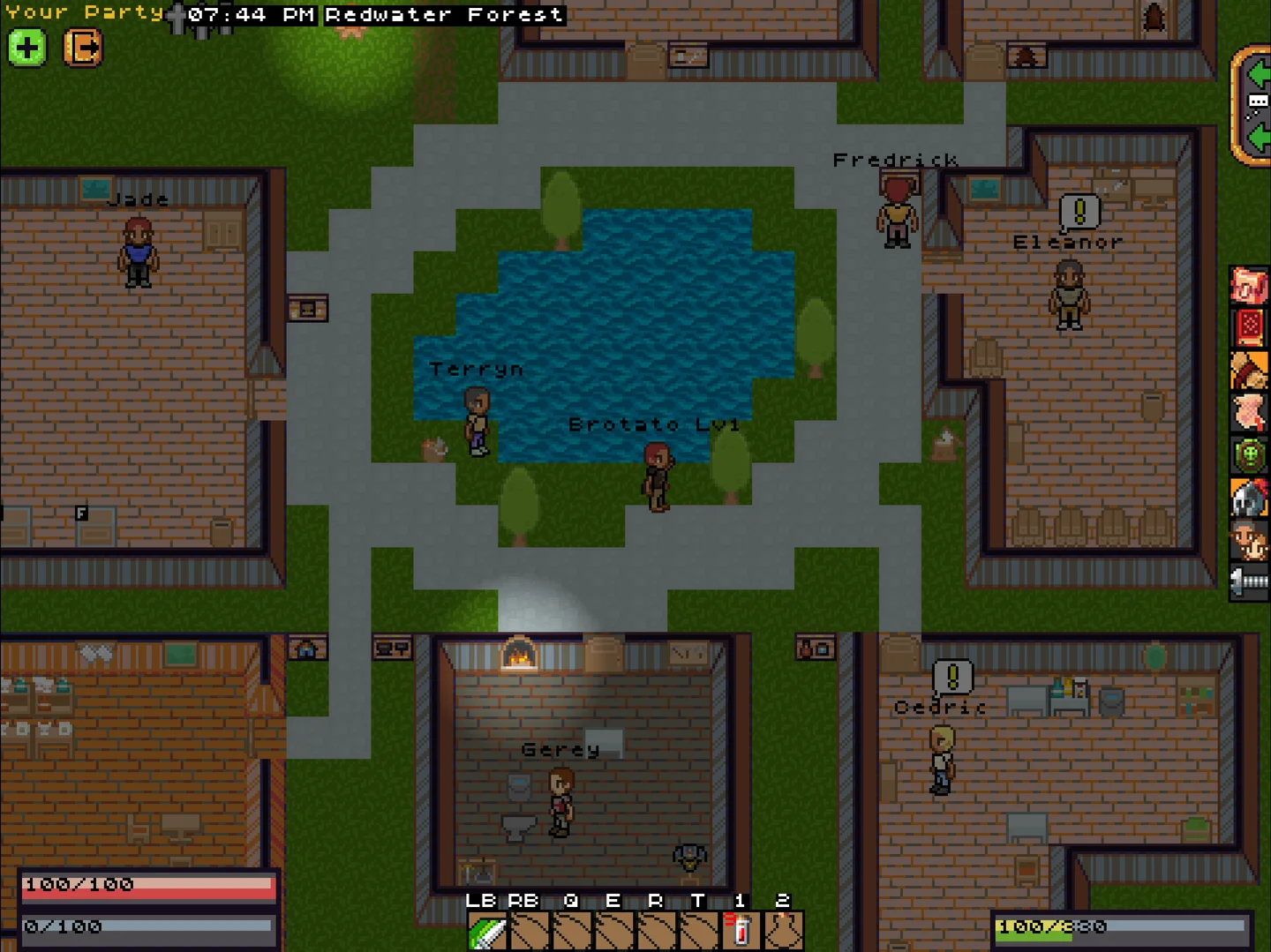
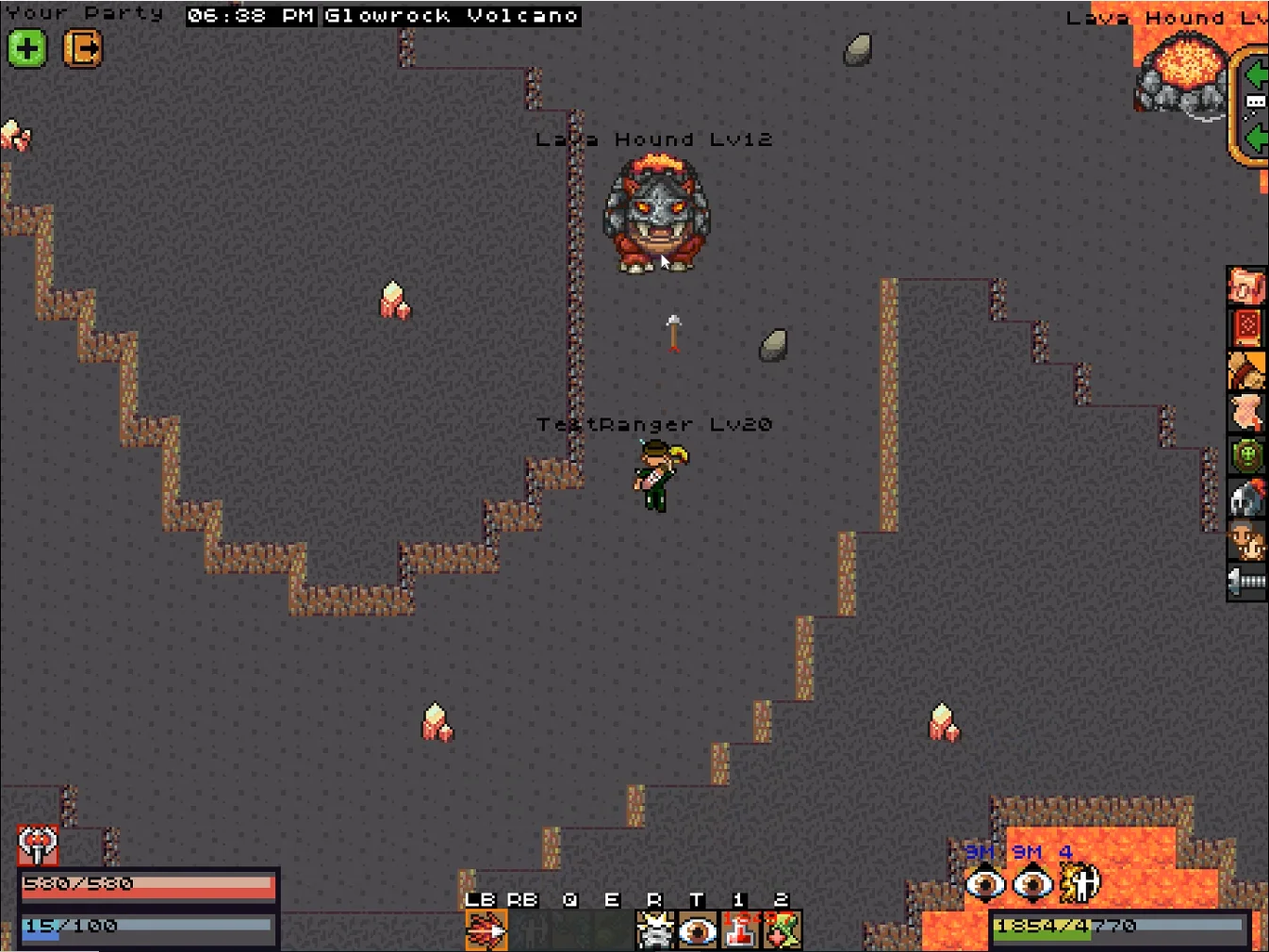
The gallery uses the same original Aetheria Online reference imagery as the source website. These are not screenshots captured from a current Emberlight practice session. Their captions identify the original version because visible landscapes and interfaces can differ. A volcano illustration, for example, does not add a fourth region to this browser campaign.
The two video embeds also match the source selections, with the second beginning at three seconds. Watch for broad presentation and movement ideas, but do not assume every demonstrated feature is present here. Recordings from an online edition may include systems that this independent solo game deliberately does not connect to or implement.
For mechanical decisions, prefer the current game interface and the version-specific notes on this page. If a recording shows unfamiliar controls, do not keep pressing them while an encounter continues. Pause and verify the relevant input. Reference material is helpful when it reduces uncertainty, not when it replaces an observable result with an unsupported assumption.
Save the lesson and the character
Export a JSON save from the game's pause menu after meaningful progress. Local browser storage supports continued play, but exported files provide a separate backup you can identify and retain. Do this before changing browsers, clearing site data or experimenting with another character. This guide has no account-based recovery service for your adventure.
Write down one practice focus for the next session alongside the backup if it helps. A short note such as maintaining an exit after attacking is more actionable than simply deciding to play better. The character file preserves game progress; your note preserves the reason for your next attempt. They solve different parts of returning comfortably.
If the game stays blank, try the direct link instead of repeatedly reloading an active session. A browser refusal to enter fullscreen does not prove that the underlying game is broken. Once access is working, return to a small input test. Establish reliable control first, then decide whether to practise, continue a chapter or return to a desk duel.
Aetheria video references
Same selections as the source website. Footage may show the original game or another version, not the current Emberlight feature set.
Aetheria Online questions
Is this another flick-based physics game?
No. Emberlight uses continuous character movement, attacks, skills and dodges in a solo RPG campaign.
Do I need a microphone or an online room?
No. This solo game does not require the voice or room systems used by other games in the collection.
What should I practise first?
Give the iframe focus, test movement and make one basic attack within range. Add skills and dodges after the basic feedback is understandable.
Does the drill selector track my score?
No. It only changes the advice on this page. It does not observe the iframe, measure timing or award achievements.
Why does Space sometimes do nothing?
Check game focus, attack range and the cooldown indicator. These produce different problems that repeated key presses may not solve.
Which key handles recovery?
R uses a potion when missing health, supply and cooldown permit it. Check supplies before difficult encounters.
Will my Pen Fight statistics carry over?
No. These games have independent progress. The Aetheria guide does not transfer accounts, victories or rewards.
Are the videos the same as the source website?
Yes: uzKYSpj2yI8 and _eDN3yZlC00, with the second starting at three seconds. Footage may show another edition.
How can I protect a longer practice session?
Export an Emberlight JSON save through the pause menu. Do not rely on local storage automatically transferring between browsers or devices.